
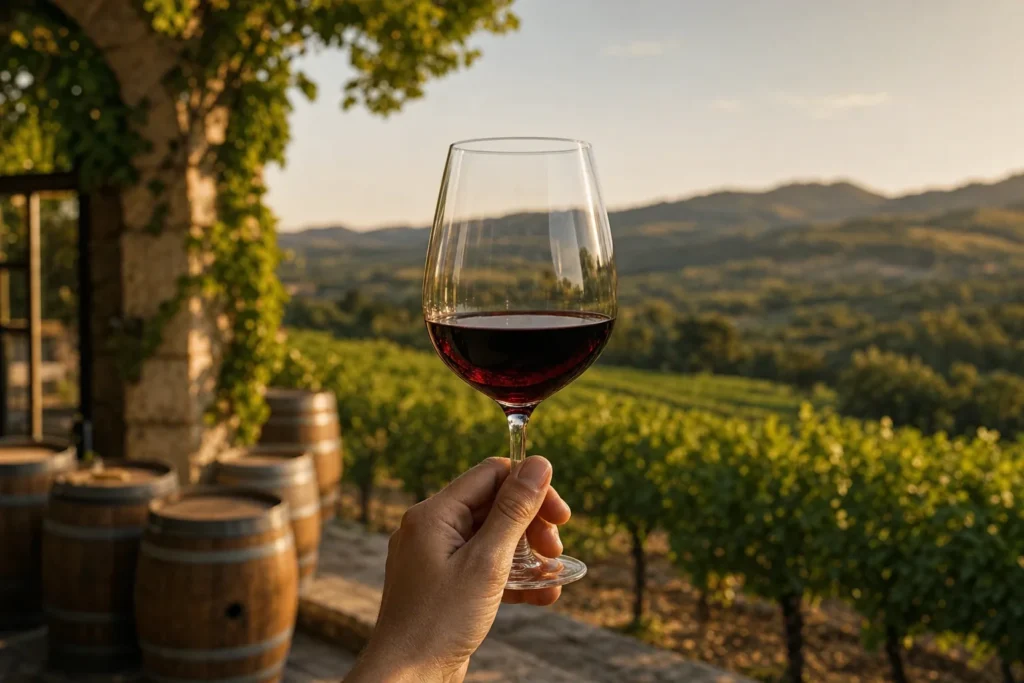
Whether you’re visiting a winery for the first time or planning your next wine country adventure, knowing how to taste wine properly can transform your experience from nerve-wracking to genuinely enjoyable. Wine tasting etiquette isn’t about pretension or memorizing obscure terminology. It’s simply a set of practices that help you appreciate what’s in the glass, respect the winemaker’s craft, and feel confident in any tasting room setting.
As a first-time visitor to Napa or Sonoma, you might worry about saying the wrong thing or making a misstep. The good news is that tasting rooms in both regions welcome curious newcomers every single day. The winemakers and staff are genuinely passionate about sharing their wines and helping you discover what you love. Once you understand the basics of wine tasting tips for beginners, you’ll find the whole experience far more relaxing and rewarding.
The Five Senses of Wine Tasting
How to taste wine properly involves engaging all your senses in a deliberate sequence. This isn’t just tradition; it’s actually how you extract maximum flavor and enjoyment from each pour.
Start by observing the wine’s appearance. Hold your glass at eye level against a light background and notice the color, clarity, and intensity. Red wines range from pale ruby to deep garnet. White wines can be pale yellow, golden, or even amber. Any cloudiness or sediment tells a story about the wine’s age and style. Next, swirl the wine gently to release its aromas. This aerates the liquid and awakens volatile compounds. Then, bring your nose to the glass and take a slow, deliberate sniff. What do you notice? Fruit, spice, earth, floral notes? There’s no wrong answer. Trust your own senses.
Now comes the actual tasting. Take a small sip and hold it in your mouth for a moment. Let it coat your palate. You might notice how the wine’s flavors evolve from the initial taste to the finish. Slurp gently if you want to aerate the wine further in your mouth. This technique, while it sounds awkward, genuinely enhances your ability to detect subtle flavors. Finally, swallow and notice the aftertaste. Does it linger? Is it pleasant? These observations help you understand what makes this wine special.
What to Wear and Bring
Dressing appropriately for a wine tasting makes the day more enjoyable. Skip heavy perfume or cologne, as strong scents interfere with your ability to smell the wine’s aromas. Wear comfortable, casual clothing appropriate for a walk through vineyards. Many tasting rooms are indoors and climate-controlled, but you might spend time outside, so layers are smart.
Bring a few essentials:
- Water to cleanse your palate between tastings
- A notebook or your phone to jot down wines you enjoy
- Sunscreen if you’ll be outside
- A positive attitude and genuine curiosity
Leaving behind anything too formal helps you stay relaxed. This isn’t a black-tie event; it’s an exploration.
Essential Wine Tasting Etiquette Rules
Wine tasting etiquette boils down to respect for the wine, the staff, and fellow tasters. Here are the key practices:
Don’t feel obligated to finish every pour. Tasting rooms expect you to sample, not necessarily to drink every ounce. It’s perfectly acceptable to taste a small amount and skip a wine if it doesn’t appeal to you.
Spit if you need to. Many professional tasters use the spittoon provided for exactly this reason. After several tastings, spitting rather than swallowing helps you stay clear-headed and continue tasting thoughtfully. Don’t feel self-conscious about it.
Ask questions freely. Staff members love talking about their wines. Ask about the grape varieties, the winemaking process, the region’s climate, or food pairing suggestions. Your curiosity shows genuine interest.
Be honest about your preferences. You don’t need to pretend to like a wine you don’t enjoy. It’s far more helpful to the staff if you say, "This one’s a bit dry for my taste," than to nod along silently. Their recommendations improve when they understand your actual preferences.
Taste from light to dark. If you’re sampling both white and red wines, start with whites. This progression prevents heavier flavors from overwhelming your palate.
Don’t monopolize the staff member’s time. During busy hours, keep your questions and conversation brief so they can serve other guests. During slower times, feel free to chat longer if both parties are enjoying the exchange.
Understanding Wine Descriptions
Wine professionals often use descriptive language that might sound foreign at first. Terms like "tannins," "body," and "terroir" simply describe what you’re actually tasting or experiencing.
Tannins are compounds that create a drying sensation in your mouth, often felt in red wines. Body refers to how heavy or light the wine feels on your palate. A full-bodied wine coats your mouth more noticeably than a light-bodied wine. Terroir, a French term, describes how the wine’s flavor reflects its geographic origin, including the soil, climate, and elevation where the grapes grew.
You don’t need to memorize these terms or use them in conversation. But understanding what they mean helps you appreciate what the winemaker is showing you. Many tasting room staff will use these words to describe the wines, and now you’ll know exactly what they mean.
Making the Most of Your First Wine Tasting
Your first wine tasting experience sets the tone for your future enjoyment of wine country. Approach it with curiosity rather than pressure. No one expects you to be an expert. In fact, many seasoned wine lovers appreciate the fresh perspective of first-time tasters.
Take your time. Slow down between pours. Notice how your perception of the wine changes as it warms slightly in the glass. Talk to the people you’re with about what you taste. You might be surprised how differently two people perceive the same wine. This variation is part of wine’s magic.
If you’re planning a group outing or celebrating a special occasion, working with a local tour company can take stress off your shoulders entirely. Professionals familiar with the region can handle the logistics of planning your itinerary, arranging transportation, and coordinating winery reservations.
Your Wine Journey Awaits
Remembering these wine tasting tips for beginners transforms any winery visit into a confident, enjoyable experience. You’re not trying to impress anyone or prove your knowledge. You’re simply learning to appreciate the remarkable craft of winemaking while discovering what flavors speak to your palate.
Whether this is your first glass or your hundredth, approach each tasting with an open mind. The best wine is the one you enjoy most, regardless of price or prestige. As you explore the stunning vineyards of Napa and Sonoma, you’ll develop your own taste preferences and deepen your appreciation for wine country’s richness and diversity.